
Mental health marketing in 2027 is moving toward AI search, sharper niches, authentic human voice, reputation beyond your website, privacy-first tracking, and stronger referral relationships. Therapists who clearly explain who they help, keep their information consistent online, and protect client privacy will be the ones both AI tools and clients choose first.
It’s 11 p.m., and someone in your city finally decides they’re ready for therapy. They don’t scroll through ten blue links anymore. They open ChatGPT and type: “Find me a therapist who helps with burnout and offers evening sessions.”
A few seconds later, they have a shortlist of three names. Here’s the uncomfortable question: was yours one of them?
Mental health marketing has changed more in the past two years than in the ten before it. Google announced at I/O 2026 that its AI Overviews reach 2.5 billion monthly users, and ChatGPT passed 900 million weekly users in early 2026.
In this post, I’ll walk you through six trends shaping marketing for therapists in 2027, what each one means in plain English, and the one step you can take on each this month.
Whether you’re opening your first practice or you’ve been marketing your private practice for years, these shifts affect you.
Key Takeaways
- AI search is the new front door. Mental health marketing in 2027 starts with AI tools that shortlist three to five therapists, so clear answers on your website matter more than ever.
- Fewer clicks reach websites. Pew Research Center found users clicked a traditional result in just 8% of visits when an AI summary appeared, compared with 15% without one.
- Specific beats broad. A clear niche makes your practice easier for AI tools and referrers to recommend, the core of effective marketing for therapists.
- Human voice builds trust. Warm, honest content outperforms polished, generic copy when marketing mental health services.
- Your reputation lives everywhere. Consistent details across your Google Business Profile, directories, and reviews are now essential to behavioral health marketing.
- Privacy is non-negotiable. Tracking pixels on therapy websites can expose sensitive data, as the FTC’s 2023 BetterHelp order showed.
- Referrals and LinkedIn are growing. Social media marketing for therapists works best when posts start real conversations with clients and referral partners.
- Consistency beats volume. A few focused hours a week on marketing your private practice can outperform occasional bursts of effort.
What Is Mental Health Marketing?
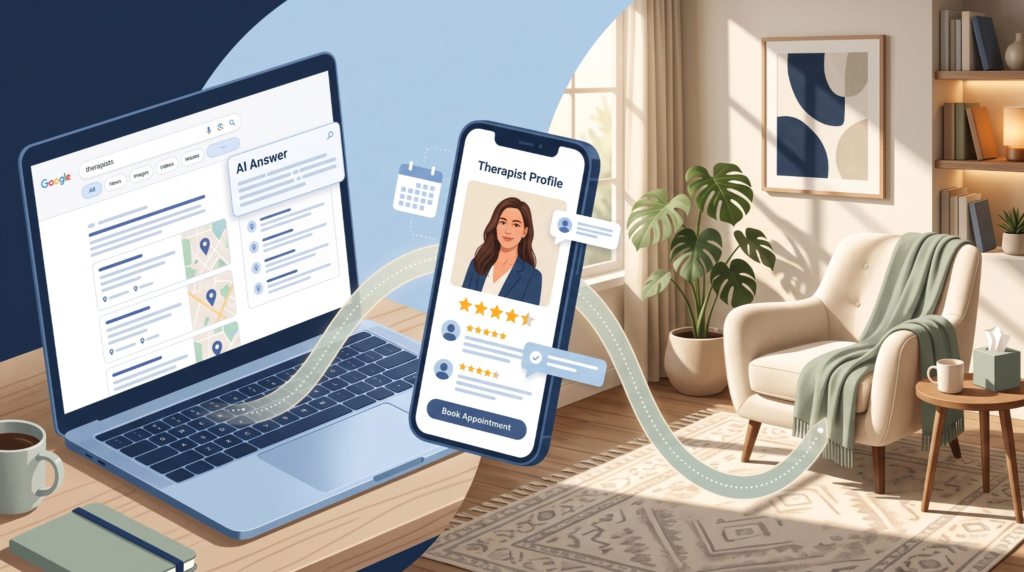
Mental health marketing is how therapists, counselors, and clinics help the right clients find them, understand what they offer, and trust them enough to reach out.
It covers everything from your website and blog to your Google Business Profile, directory listings, reviews, and social media.
But here’s what makes it different from marketing a coffee shop or a software tool: your future client is often scared, tired, or hurting when they find you. That changes everything about tone, ethics, and privacy. When it’s done well, marketing mental health services feels less like selling and more like holding the door open.
Why Is Mental Health Marketing Changing So Fast?
If your inquiries have slowed down lately, you’re not imagining it, and you’re not alone.
Some therapists blame the cost of living. Others suspect AI. In my experience, both can be true. But the bigger shift is where people look and how much they read before they decide.
Here’s the data that made me sit up. Pew Research Center analyzed the Google searches of 900 U.S. adults in March 2025. When an AI summary appeared, users clicked a traditional result in just 8% of visits, compared with 15% when no summary appeared.
In plain terms: ranking on Google now earns fewer visits than it used to.
That’s why behavioral health marketing that worked five years ago now leaves gaps. A directory listing, a basic website, and word of mouth used to be enough. Today, a client may decide about you before they ever reach your website.
How do clients find a therapist today?
The modern client journey usually looks like this:
- They ask a question, often in a full sentence, on Google or ChatGPT.
- They read a short answer. An AI summary may name three to five practices.
- They check your reputation on your Google Business Profile, reviews, and directory bio.
- They test the fit on your website or LinkedIn. Do you “get” people like them?
- They book, or they quietly move on, often within minutes.
Every trend below connects to one of these five steps.
What Are the 6 Mental Health Marketing Trends for 2027?
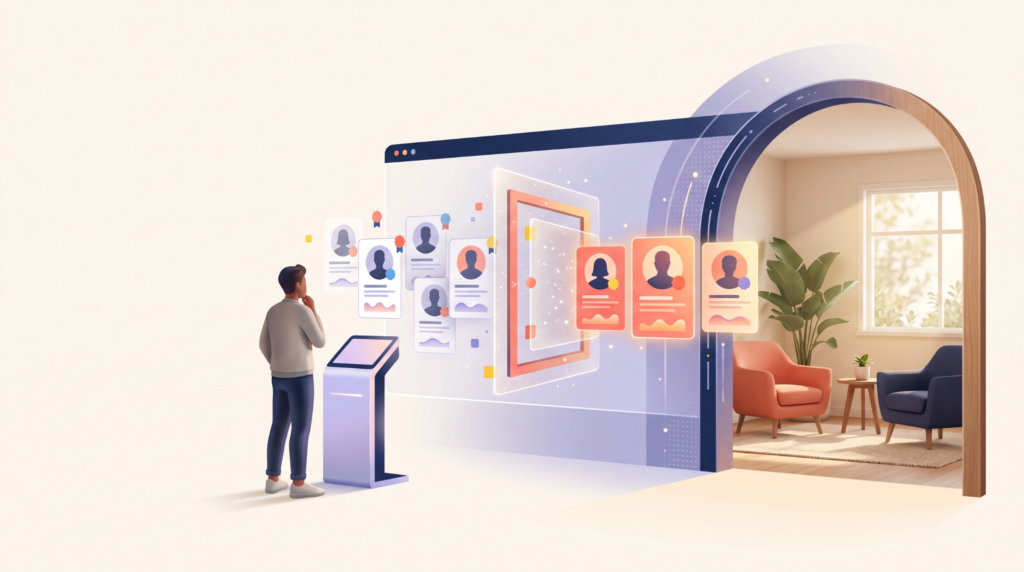
Before we dig in, here’s the big picture of where digital marketing for therapists is heading:
| Area | How it worked before | How it works in 2027 |
| Discovery | Google’s list of ten links | AI answers that shortlist a few names |
| Messaging | Broad, “I help everyone” | Specific about who you help |
| Content | Polished and generic | Warm, human, and in your voice |
| Reputation | Mostly your website | Profiles, reviews, and directories everywhere |
| Tracking | Add every ad pixel | Privacy checked first |
| Referrals | Local word of mouth | LinkedIn and professional networks too |
Now let’s break each one down.
1. AI Tools Are Becoming the New Front Door to Therapy
Think of AI search as a new receptionist, one who decides which names a client hears first. That makes AI the new starting point for mental health digital marketing.
Here’s what it looks like in practice. Instead of typing “anxiety therapist in Denver,” someone asks ChatGPT for a social anxiety therapist in Denver who offers telehealth. They get three to five options with short reasons. That’s the shortlist.
AI tools build those answers from pages that explain things clearly. If your website doesn’t answer your clients’ real questions, AI has nothing to repeat about you.
Pro tip: Add short, direct answers to the questions you hear most in consultations, like “What happens in a first session?” or “Do you offer online therapy?” Put the answer in the first sentence.
2. A Clear Niche Matters More Than Ever
People tell AI far more than they ever typed into Google. As private practice founder Marie Fang explained to Heard, clients now use AI for longer conversations about how their anxiety actually shows up in daily life.
Now compare these two lines:
- “I help adults with anxiety, depression, and relationships.”
- “I help new mothers navigating postpartum anxiety.”
The first is hard to match to a detailed question. The second practically answers it.
Specific language doesn’t shrink your practice. It makes you easier to recommend, and that’s the heart of effective marketing for therapists.
Pro tip: Rewrite your “who I help” sentence using the exact words clients use in their first session, not clinical terms.
3. Human Voice Is Beating Polished, AI-Generic Content
Here’s the irony of the AI era: the more AI-written content floods the internet, the more people crave something that sounds like a real person.
Readers are noticing the sameness. They check Reddit, ask friends, and look for signs that an actual human is behind the practice.
In mental health, this matters more than almost anywhere else. Marketing mental health services is about helping a scared, tired person feel safe enough to reach out. Warmth does that. Generic copy doesn’t.
Pro tip: Read your About page out loud. If it sounds like a brochure instead of you, it’s time for a rewrite.
4. Your Reputation Now Lives Beyond Your Website
Many searches now end without a single click. That means clients often judge you from what they see on the search page itself: your Google Business Profile, your reviews, your directory bio.
Those same profiles also feed AI tools. If your hours, services, or location don’t match across platforms, AI tools may trust your information less.
That’s why strong behavioral health marketing now includes regular profile checks, not just website updates. It’s also why any good counselor and therapist SEO company will usually start with a listing audit before writing a single new page.
Pro tip: Search your own name and practice name today. Fix any detail that doesn’t match.
5. Privacy-First Marketing Is Becoming Non-Negotiable
This one isn’t flashy, but it may be the most important trend on the list.
Common marketing tools like ad tracking pixels can send visitor information to advertising platforms. On a therapy website, even a page visit can reveal something deeply personal.
Regulators take this seriously. In March 2023, the FTC announced a proposed order against BetterHelp that banned the online counseling company from sharing consumers’ health data for advertising. BetterHelp was required to pay $7.8 million for partial refunds to consumers.
You don’t have to be a large platform for this to matter. Your clients trust you with their stories, and any mental health marketing services you use should protect that trust from the very first click.
Pro tip: Ask your web provider which tracking tools run on your contact and booking pages. Remove anything you can’t explain, and speak with a compliance professional for legal questions.
6. Referral Relationships and LinkedIn Are Growing in Value
Doctors, psychiatrists, HR teams, and fellow clinicians usually look you up before they refer. More often than not, they look on LinkedIn.
In a May 2026 episode of The Entrepreneurial Therapist Podcast, the host named networking as the strategy that still builds seven-figure practices. LinkedIn is where those relationships become visible.
I’ve seen this firsthand in my own ghostwriting work. One mental health practitioner I wrote for had almost no messages when we started. We stopped chasing views and focused on posts that started real conversations. Her DMs began filling up, and by the second month, collaboration offers were coming in.
Social media marketing for therapists doesn’t mean dancing on video. On LinkedIn, it means clear, thoughtful posts that show how you think. That’s digital marketing for mental health professionals at its most practical.
Pro tip: Update your LinkedIn headline so a referrer understands your specialty in five seconds flat.
How Can Therapists Prepare Their Marketing for 2027?

Good news: you don’t need to tackle all six trends at once. The smartest approach to marketing your private practice is to fix the foundations first, then build steadily.
What should you update first on your website?
Start with the changes that help both clients and AI tools understand you:
- Your “who I help” statement. Put it at the top of your homepage in plain words.
- Answers to real client questions. Add short sections or blog posts that answer what people ask before booking.
- A clear booking path. Make it obvious how to reach you from every page.
- Consistent details. Match your name, services, and location to your Google Business Profile and directories.
How much time does good marketing really take?
Less than most therapists fear. In mental health digital marketing, consistency beats volume every time.
A few focused hours a week can be enough when they go to the right places. That might look like one helpful blog post a month, one or two LinkedIn posts a week, and a quick profile check each quarter.
And if even that feels like too much alongside a full caseload? That’s your sign to get support. Digital marketing for therapists works best when it’s steady, not squeezed in at midnight.
Which Mental Health Marketing Mistakes Should You Avoid in 2027?
Most mental health marketing mistakes are easy to avoid once you can name them. Here are the five I see most often:
- Publishing generic AI content. It fills a blog, but it rarely builds trust or earns citations.
- Leaving details inconsistent. Mismatched hours or services make AI tools and clients less confident in you.
- Adding tracking tools without a privacy check. One pixel on the wrong page can put client trust at risk.
- Chasing views instead of conversations. Big numbers feel nice. Conversations lead to bookings.
- Staying too vague to recommend. If you sound like everyone else, nobody can tell why they should choose you.
Good behavioral health marketing isn’t about doing more. It’s about doing fewer things with more clarity and care.
Should You Hire a Mental Health Marketing Agency or Do It Yourself?
Honestly? It depends on your time, your budget, and how deeply the work needs to understand your field. Here’s a quick comparison:
| Option | Best for | Main strength | Main risk |
| Do it yourself | New practices with time to learn | Full control, lowest cost | Slow progress, hard to see your own value |
| General marketing agency | Practices wanting broad ad campaigns | Wide range of services | May miss ethics, privacy, or clinical tone |
| Mental health specialist (agency or copywriter) | Practices wanting trust-led growth | Knows the language, ethics, and client journey | Smaller teams may have limited capacity |
A good mental health marketing agency or specialist copywriter should understand three things general agencies often miss: ethical limits on claims, client privacy, and trauma-informed language.
Before you hire a therapist marketing agency or any provider of mental health marketing services, ask these four questions:
- Have you written for therapists or clinics before? Can I see examples?
- How do you handle privacy and tracking on therapy websites?
- How will you learn my voice so the content sounds like me?
- How do you measure success beyond traffic and views?
Whether you choose a full therapist marketing agency, a mental health marketing agency, or a counselor and therapist SEO company, their answers will tell you quickly who truly understands your work.
What Therapists Are Asking About Marketing in 2027
These are the questions I hear most from therapists and clinic owners. Each answer is short and practical, so you can find what you need fast.
How do therapists get more clients online?
Therapists get more clients online by being specific about who they help, answering real client questions on their website, keeping profiles consistent, and building referral relationships. Warm, human content converts better than generic copy across all digital marketing for mental health professionals. A copywriter who specializes in mental health can turn your expertise into words clients recognize instantly.
Is SEO still worth it for therapists if clients use ChatGPT?
Yes. AI tools draw on the same clear, trustworthy web content that SEO builds. A well-structured website with helpful answers improves your chances of appearing in both Google results and AI recommendations. The key is writing for real client questions, which is exactly what specialist therapist content is designed to do.
How do I get my therapy practice to show up in ChatGPT?
Explain clearly who you help, where you practice, and how sessions work. Use the same details across your website, Google Business Profile, and directories. Publish helpful answers to common client questions. AI tools favour content that is specific and consistent, so precise, well-written pages give your practice the strongest chance.
Do therapists need to be on social media to get clients?
Not on every platform. Many therapists do well with one channel used consistently. For referrals and professional trust, LinkedIn is often the best fit. Social media marketing for therapists works when posts start real conversations, and a ghostwriter who learns your voice can keep you visible without taking time from clients.
Should therapists rely on Psychology Today or their own website?
Use both. Directories bring visibility and trust, but you control very little on them. Your own website lets you explain your approach fully, answer questions, and appear in AI search. The strongest practices treat directories as a doorway and their website as the place where clients decide.
What should a therapist post on LinkedIn?
Share how you think, never private client details. Strong topics include common myths in your specialty, what a first session feels like, lessons from your training, and gentle answers to everyday questions. Posts that end with a simple question invite conversation. Professional ghostwriting keeps these posts consistent and true to your voice.
How long does mental health marketing take to work?
Most practices see early signs, such as more profile views and conversations, within one to three months. Search visibility usually builds over three to six months or longer. Consistency matters more than speed, which is why many therapists choose ongoing content support over one-off campaigns.
How much should a private practice spend on marketing?
It depends on your goals, location, and stage of practice. Many practices grow with modest budgets by investing in strong website copy and regular content instead of paid ads. Organic content keeps working long after it’s published, so well-written pages often deliver better long-term value than short ad bursts.
Is it ethical for therapists to market their services?
Yes, when it’s done honestly. Marketing mental health services ethically means avoiding guarantees, protecting privacy, and never using fear to pressure people. It simply helps someone who needs support find a professional who can help. Working with a writer who understands mental health ethics keeps your message caring, accurate, and professional.
What is the difference between mental health marketing and regular marketing?
Mental health marketing must protect privacy, avoid exaggerated claims, and speak to people who may be vulnerable. Regular marketing often relies on urgency and bold promises, which can harm trust in therapy. The best approach uses calm, clear, trauma-informed language, the kind a specialist mental health copywriter is trained to write.
The Therapists Clients Will Find in 2027
After years of writing for therapists and clinics, I keep seeing the same pattern. The practices that grow are rarely the loudest ones. They’re the ones whose words finally match what their clients are already searching for.
Every trend in this guide points back to that one idea. AI tools reward clarity. Clients reward warmth. Referrers reward consistency. Privacy rules reward care. None of it asks you to become someone you’re not, and none of it requires a big advertising budget. It asks for your real expertise, explained in language a tired, worried person can understand at eleven o’clock at night.
That’s the quiet work behind good mental health marketing, and it’s work worth doing well. Your future clients are already looking for the kind of help you give. Your job in 2027 is simply to make sure they can find you, recognise you, and feel safe enough to say hello. If you’d like a partner in that work, I’d be glad to hear about your practice.
Your future clients are already searching. Let’s make sure they find you. Get in touch to talk about content that helps your practice be seen, understood, and trusted.