
The most common symptoms of burnout are constant tiredness that sleep doesn’t fix, feeling numb or irritable, trouble focusing, putting things off, pulling away from people, and losing interest in things you used to enjoy. Burnout builds slowly from long-term stress, but rest, support, and small daily changes can help you recover.
You can sleep for nine hours and still wake up exhausted, and when that feeling lasts for weeks, it is often one of the symptoms of burnout rather than just a busy season. As a working mom of two who balances a full-time writing career with client work, I know how easy it is to miss the early burnout signs and keep going. This guide explains 12 common symptoms, how burnout differs from everyday stress, and the practical steps that support recovery.
What Is Burnout, and What Does It Feel Like?

Burnout is a state of physical, emotional, and mental exhaustion caused by long-term stress. It usually develops when the demands on you stay high for months and you don’t get enough time to rest or recover.
The World Health Organization defines burnout as a syndrome resulting from chronic workplace stress that has not been successfully managed. Many people also use the word to describe exhaustion from caregiving, studying, or managing a household.
Burnout rarely has a single cause. It usually grows from a mix of pressures, such as:
- Heavy workloads with little control over how the work gets done
- Long hours without real breaks
- Feeling unappreciated or unsupported
- Caring for others without anyone caring for you
- Trying to meet high standards all the time
Many people search “what does a burnout feel like” because the feeling is hard to put into words. Common descriptions include:
- Feeling mentally drained before the day has even started
- Running on autopilot and getting through tasks without really being present
- Having nothing left to give, even to the people you love
- A heavy emotional fatigue that a weekend off doesn’t lift
Emotional fatigue is at the centre of burnout. It is different from ordinary tiredness because it affects your mood, your patience, and your sense of purpose, not just your energy levels.
What Are the Physical Symptoms of Burnout?
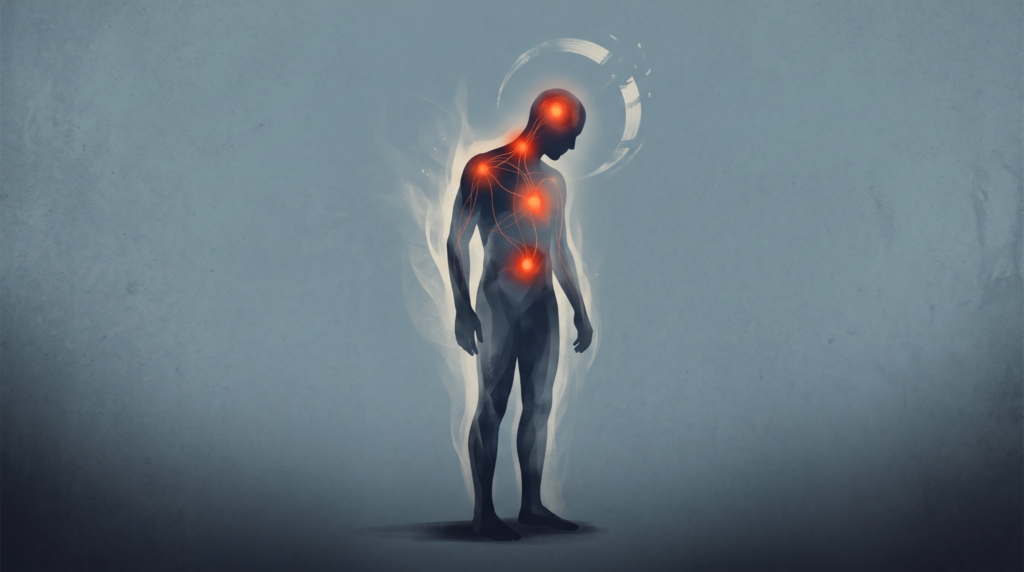
The body often signals burnout before the mind does. People frequently blame these symptoms on a cold, a poor diet, or a bad week, so they go unnoticed for a long time.
1. Why am I still tired after a full night’s sleep?
Normal tiredness improves with rest. Burnout tiredness does not. You may sleep for eight or nine hours and still wake up feeling heavy and slow.
This happens because long-term stress keeps your body in a constant state of alert. Even while you sleep, your system doesn’t fully switch off, so you never get the deep recovery you need.
2. Why do I keep getting headaches, stomachaches, or colds?
Stress that lasts for months can wear down the body. Many people with burnout notice frequent headaches, stomach problems, muscle tension, or catching every cold that goes around.
These aren’t imagined symptoms. They are real physical signals that your body is under more pressure than it can handle.
3. Why can’t I sleep even when I’m exhausted?
This is often called feeling “tired but wired.” Your body is exhausted, but your mind keeps racing through tomorrow’s tasks, old conversations, or worries.
Over time, poor sleep and burnout feed each other. Less sleep makes stress harder to manage, and more stress makes sleep harder to get.
What Are the Signs of Emotional Burnout?
For many people, the signs of emotional burnout are what finally make them realize something is wrong. These changes affect how you feel about yourself, your work, and the people around you.
4. Why do I feel numb, empty, or detached?
When stress continues for too long, the mind may start to protect itself by shutting down feelings. You may feel flat, distant, or unable to enjoy good news.
This numbness is one of the clearest signs of emotional burnout. It can feel like watching your own life from the outside.
5. Why do small things make me snap or cry?
When your emotional energy runs out, small problems can feel huge. A spilled drink, a late reply, or a simple question can lead to anger or tears.
This isn’t a personality flaw. It’s a sign that emotional fatigue has left you with no reserve for everyday frustrations.
6. Why does it feel like nothing I do matters?
Burnout can bring a sense of hopelessness, a feeling that no matter how hard you try, nothing changes. You may start to wonder what the point is.
If this feeling spreads to every part of your life and lasts more than two weeks, speak to a doctor or therapist. It may be a sign of depression, which needs professional care.
What Are the Signs of Burnout in the Workplace?

The signs of burnout in the workplace often look like performance problems, which is why they are easy to misread. The same signs also appear at school and in daily household tasks.
These signs are widespread. In the American Psychological Association’s 2024 Work in America survey, 67% of workers reported experiencing at least one outcome often associated with workplace burnout in the last month, such as lack of interest, motivation, or low energy, feeling lonely or isolated and a lack of effort at work. In other words, signs of workplace burnout are common, not rare.
7. Why can’t I focus or remember simple things?
Burnout can cause “brain fog”: trouble concentrating, forgetting appointments, or reading the same email three times. Decisions that used to be easy may suddenly feel overwhelming.
This is one of the most common signs of work burnout. When you feel mentally drained, your mind has less capacity for planning, memory, and attention.
8. Why do I keep putting everything off?
Procrastination is often mistaken for laziness. With burnout, though, putting things off usually happens because you simply don’t have the energy to start.
Even small tasks can feel like climbing a mountain. Recognizing this as a symptom, not a character flaw, is an important first step.
9. Why do I dread work or feel like I’m failing at it?
Many people with burnout feel a heavy sense of dread on Sunday evenings or before the workday starts. They may also become cynical about their job or feel less capable, even when their work is still good.
These are classic signs of workplace burnout. Together with exhaustion, they match the pattern researchers use to identify burnout.
What Are the Hidden Burnout Signs Most People Miss?
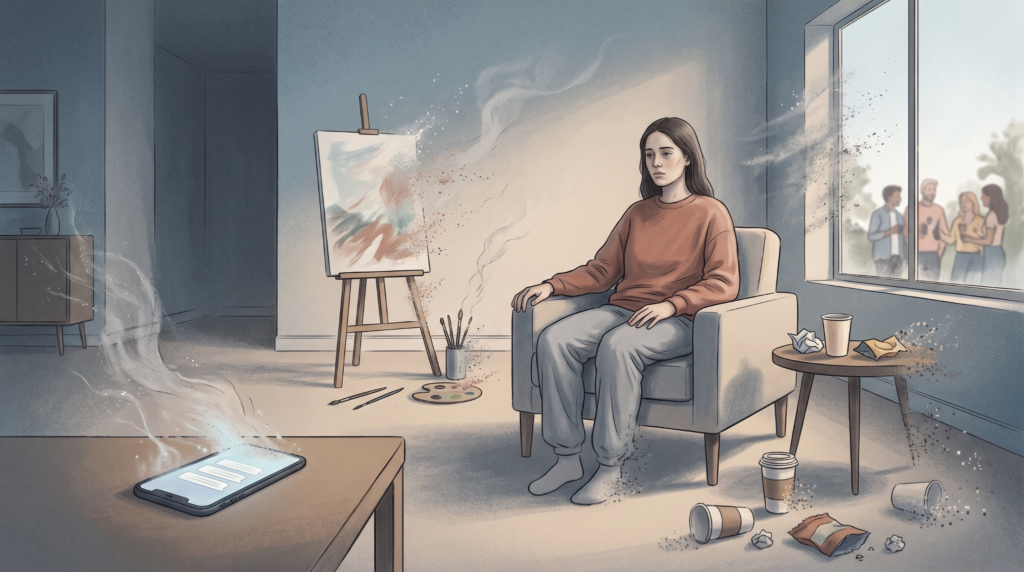
Some burnout signs show up as changes in behavior rather than feelings. Because they develop gradually, people rarely connect them to stress.
10. Why am I pulling away from friends and family?
You may start canceling plans, leaving messages unanswered, or avoiding conversations. Social time that once felt good now feels like another task.
Withdrawing can seem like a way to save energy, but it often increases loneliness and makes burnout worse.
11. Why am I leaning on snacks, scrolling, or caffeine to get through the day?
When you are running on empty, it’s natural to reach for quick comfort. Extra coffee, late-night scrolling, sugary snacks, or more alcohol can feel helpful in the moment.
These habits are understandable, but they numb the symptoms of burn out rather than treating them. Noticing them without judgment helps you choose better support.
12. Why have I stopped enjoying the things I used to love?
Losing interest in hobbies, music, or time with friends is an important warning sign. When nothing feels enjoyable, your mind may be too drained to feel pleasure.
Take this sign seriously, especially if it lasts for weeks.
The 12 symptoms at a glance
| Type | Symptoms |
| Physical | Constant tiredness, frequent illness or aches, poor sleep |
| Emotional | Numbness, irritability, hopelessness |
| Work and daily tasks | Brain fog, procrastination, dread or feeling like a failure |
| Behavioral | Pulling away from people, numbing habits, loss of enjoyment |
How Do You Know If It’s Burnout or Just Stress?
Stress and burnout are closely linked, but they are not the same. A simple way to tell them apart: stress feels like too much, while burnout feels like nothing left.
With stress, you still care and feel driven to fix problems. With burnout, you may stop caring altogether. Stress often improves after a good break, but burnout usually doesn’t.
| Stress | Burnout | |
| How it feels | Too much pressure, too many demands | Empty, drained, and detached |
| Energy | Restless, anxious energy | Very low energy, even after rest |
| After a break | Usually improves | Often returns quickly or doesn’t improve |
If you are still unsure what does a burnout feel like compared with everyday stress, ask yourself two questions. How long has this feeling lasted? And does rest actually help?
Weeks of exhaustion that rest doesn’t fix point toward burnout. Short bursts of pressure that ease once a deadline passes are more likely to be ordinary stress.
What Actually Helps You Recover From Burnout?
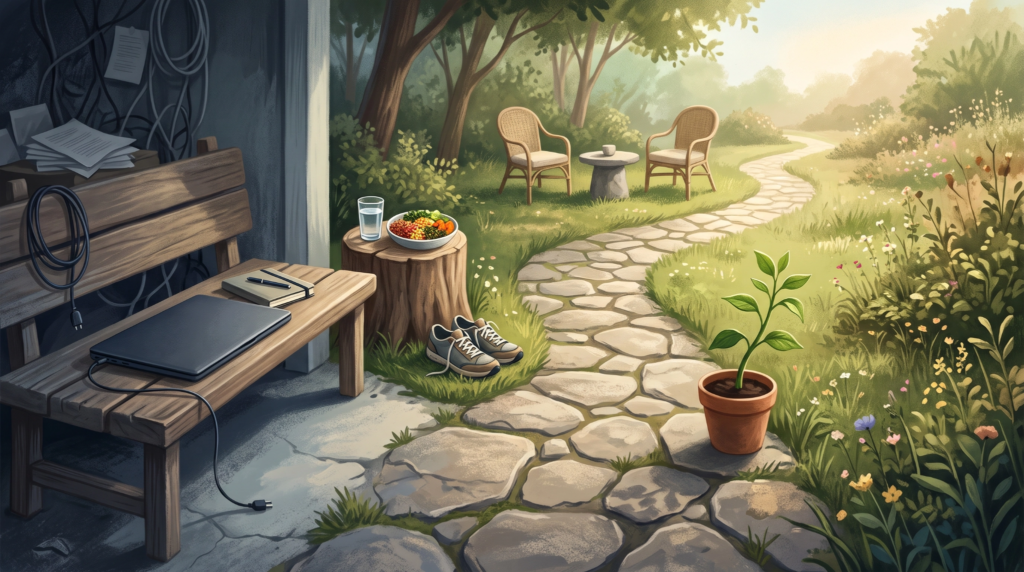
Recovery doesn’t require a complete life change overnight. It works best in small, steady steps, starting with what’s possible today.
What can I do today to feel a little better?
Pick one or two of these small actions:
- Take a 10-minute break away from screens.
- Say no to one task or request that can wait.
- Go to bed 30 minutes earlier tonight.
- Drink a glass of water and eat a proper meal.
- Tell one trusted person how you’re really feeling.
Small actions matter because burnout drains your ability to make big changes. Starting small builds energy for the next step.
What helps over the next few weeks?
Once you have a little more energy, focus on bigger changes:
- Set clear limits. Decide when work ends each day and protect that time. Turn off notifications after hours where possible.
- Share the load. Ask family, friends, or colleagues for specific help, such as “Can you handle dinner on Tuesdays?”
- Rebuild routines. Keep regular times for sleep, meals, and gentle movement such as walking.
- Talk to your manager. If work is the main cause, discuss your workload, deadlines, or flexible options.
- Do one thing just for fun each week, with no goal attached.
How do I stop burnout from coming back?
Many people ask, “Can burnout be permanent?” For most people it isn’t, but it can return if the causes stay the same. Prevention is about catching problems early.
Use the 12 symptoms in this article as an early-warning checklist. Once a week, ask yourself whether any of them have returned. If you notice early symptoms of burn out, act before they build. Protect your downtime, ask for help sooner, and remember that rest is maintenance, not a reward.
When should I talk to a doctor or therapist?
Speak to a professional if:
- Your symptoms last longer than a few weeks
- You struggle to get through work, school, or daily tasks
- You feel hopeless, low, or numb most of the time
- You’re relying more on alcohol or other substances
If you are in danger or thinking about harming yourself, call your local emergency number or a crisis helpline right away. In the US, you can call or text 988.
What Do Experts Say About the Symptoms of Burnout?
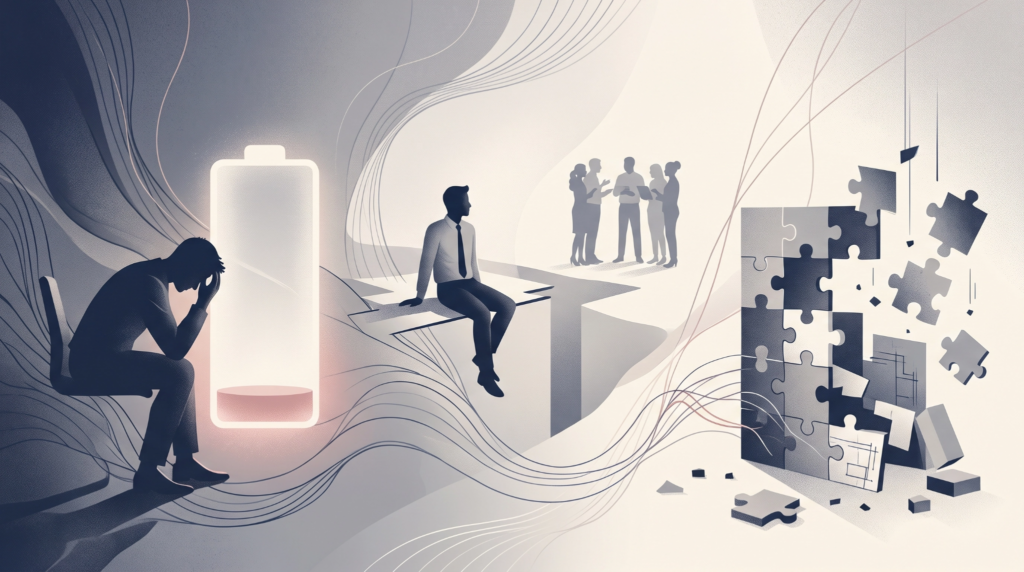
According to the World Health Organization, burnout is marked by three core features: feelings of energy depletion or exhaustion; increased mental distance from one’s job, or feelings of negativism or cynicism related to one’s job; and reduced professional efficacy.
In simple terms, that means feeling exhausted, feeling distant or negative about your work, and feeling like you’re not doing your job well. Many of the 12 symptoms in this article fit into one of those three groups.
Dr. Christina Maslach, a psychology professor at the University of California, Berkeley, is one of the world’s leading burnout researchers. She identified three dimensions: exhaustion, depersonalization, a negative, cynical, or detached response to other people, and reduced personal accomplishment, which closely match the WHO’s description.
Maslach also stresses that burnout isn’t a personal failing. In an interview with the American Psychological Association, she described burnout as “a response to chronic job stressors” that haven’t been well managed. She compares people with burnout to a canary in a coal mine: when the bird struggles to breathe, it signals that the environment is unsafe.
This is an important point for recovery. Personal steps like rest and boundaries help, but lasting relief often also requires changes to the situation causing the stress, such as workload, support, or expectations.
Surveys show how common burnout has become. In a 2024 poll by the American Psychiatric Association, forty-two percent of working adults reported experiencing burnout within the past six months. If you recognize these symptoms in yourself, you are far from alone.
What Else Do People Ask About Burnout?
Burnout raises many questions, especially when you’re trying to understand what you’re feeling and what to do next. Below are clear, short answers to the questions people ask most often about burnout, recovery, and when to seek help.
Can burnout be permanent?
Burnout is usually not permanent. Most people recover with rest, support, and changes to the situation that caused it. However, ignoring burnout for a long time can make recovery slower and raise the risk of anxiety or depression.
How long does it take to recover from burnout?
Recovery time varies. Mild burnout may improve within a few weeks of rest and change, while severe burnout can take several months or longer. Recovery depends on how long the stress lasted and whether its causes are addressed.
Can burnout make you physically sick?
Yes. Long-term stress can lead to headaches, stomach problems, muscle tension, poor sleep, and getting sick more often. If physical symptoms continue, see a doctor to rule out other health conditions.
Is burnout a mental illness?
No. The World Health Organization does not classify burnout as a mental illness or medical condition. It describes burnout as a work-related condition. However, untreated burnout can lead to mental health conditions such as anxiety or depression.
Can burnout turn into depression?
It can. Burnout that lasts a long time may develop into depression. A key difference is that burnout is usually linked to one area of life, while depression affects every area. If low mood spreads everywhere, speak with a professional.
What are the stages of burnout?
Burnout usually builds in stages. It often starts with working too hard and ignoring your own needs. This leads to growing stress, then frustration and withdrawal, and finally deep exhaustion and a feeling of emptiness.
Who is most likely to get burnout?
Burnout is more common among caregivers, parents, healthcare workers, teachers, perfectionists, and people pleasers. People with ADHD also face a higher risk because everyday tasks often take more effort. Anyone with high demands and little support can be affected.
Can you take sick leave for burnout?
In many countries, a doctor can sign you off work for burnout-related symptoms such as exhaustion, anxiety, or poor sleep. Rules differ by country and employer, so check your local laws and your company’s policies.
How do you deal with burnout when you can’t take a break?
Start with small changes. Take short breaks during the day, remove or delegate one task, protect your sleep, and ask for specific help. Even small steps reduce pressure while you plan longer-term changes.
Can kids and teens get burnout too?
Yes. School pressure, busy schedules, exams, and caring for family members can all cause burnout in young people. Signs include constant tiredness, falling grades, irritability, and losing interest in hobbies. Parents should take these signs seriously and talk openly with their child.
A Gentle Note Before You Go
Burnout is not a sign of weakness. It is a signal that you have been carrying too much for too long without enough rest or support. Recognizing the symptoms of burnout early gives you the chance to make changes before exhaustion takes over completely.
Whether you are noticing signs of work burnout, emotional exhaustion at home, or simply feeling mentally drained most days, recovery starts with one small step. That step might be an earlier bedtime, a short walk, or an honest conversation with someone you trust.
If your symptoms feel heavy or have lasted for weeks, reaching out to a doctor or therapist is a strong and sensible choice. To keep learning, explore more articles in the For You section of Healthconvos, where we break down mental health topics in simple, clear language.
Informative stuff
Thank you so much.
I think cooldown time needs to be elaborated a little more. Depending upon the type and intensity of burnout, the duration of cooldown time varies accordingly.
How to utilize the cooldown time effectively – is another topic…
Thank you so much for your suggestion. That was insightful.
👍