
ADHD burnout and laziness can look alike, but they are very different. Laziness is not wanting to do something. ADHD burnout is wanting to but being unable to, because your brain is exhausted from working harder to keep up. Burnout usually comes with stress, guilt, and emotional fatigue, while laziness usually doesn’t.
If you have ADHD and have ever been called lazy, or called yourself lazy, you are not alone, and you may not be lazy at all. What looks like a lack of effort is often ADHD burnout: the result of trying too hard for too long with a brain that has to work extra to keep up. This guide explains what ADHD burnout is, five clear ways to tell it apart from laziness, and the steps that help you recover. For a broader look at general burnout, see our guide to the 12 symptoms of burnout you shouldn’t ignore.
Key Takeaways
- ADHD burnout isn’t laziness. You want to act but can’t, because your brain is exhausted.
- It’s common. 15.5 million U.S. adults had an ADHD diagnosis in 2023, per the CDC.
- Masking drains energy, especially for women, who often go undiagnosed.
- Burnout follows a cycle: energy burst, overcommitment, rising stress, crash.
- Key signs: guilt over undone tasks, lost abilities, and exhaustion even after rest.
- ADHD burnout symptoms include emotional fatigue, irritability, and shutdowns.
- Recovery starts with doing less, resting without guilt, and asking for help.
- See a professional if exhaustion lasts weeks or you feel hopeless.
What Is ADHD Burnout?
ADHD burnout is a state of deep physical, mental, and emotional exhaustion. It happens when a person with ADHD keeps pushing harder to keep up with tasks, deadlines, and expectations, without enough rest or support.
It is more common than many people realize. According to a 2024 report from the U.S. Centers for Disease Control and Prevention, an estimated 15.5 million U.S. adults (6.0 percent) had a current diagnosis of ADHD in 2023; about half received the diagnosis at age 18 years or older. Many of those adults spent years pushing through without knowing why everyday life felt so hard.
Why Does the ADHD Brain Get Tired Faster?
ADHD and burnout are closely linked because daily life takes more effort for an ADHD brain. Tasks that seem simple to others, such as remembering appointments, starting chores, or sitting through long meetings, can require extra planning and focus.
On top of that, many people with ADHD hide their struggles to seem “normal.” This hiding, often called masking, uses a lot of energy. Over time, the extra effort leaves people feeling mentally drained, even on days when they haven’t done much.
The ADHD Burnout Cycle
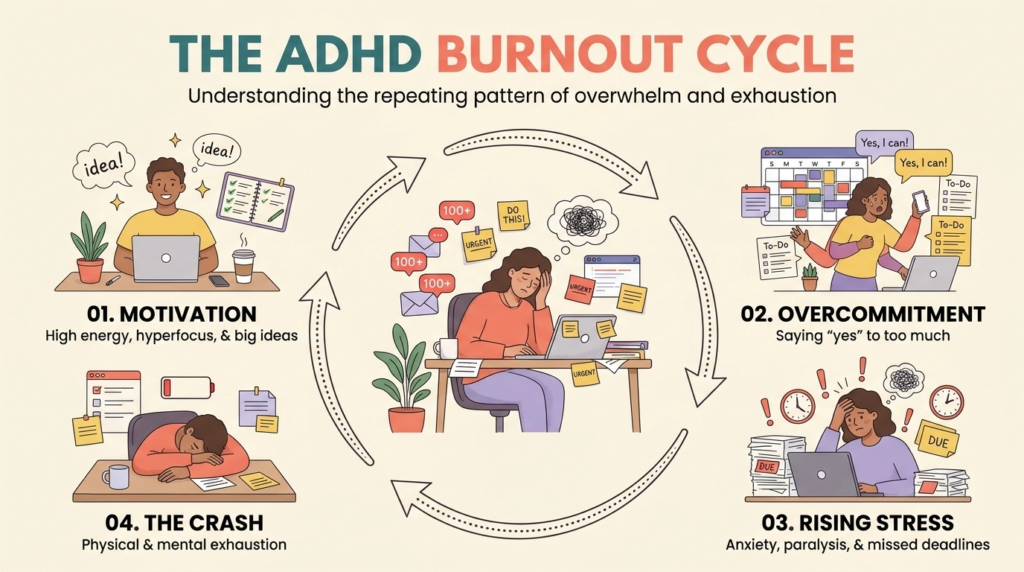
ADHD burnout often follows a clear pattern. Once you learn to spot it, you can catch yourself earlier next time, before you hit the wall.
- A burst of energy: You feel motivated and take on new projects or commitments.
- Overcommitment: You say yes to too much and push to keep up.
- Rising stress: Deadlines pile up and your usual coping tools stop working.
- The crash: You hit a wall and can barely manage basic tasks.
Many people go through this cycle again and again without realizing it has a name.
Why Does ADHD Burnout Get Mistaken for Laziness?
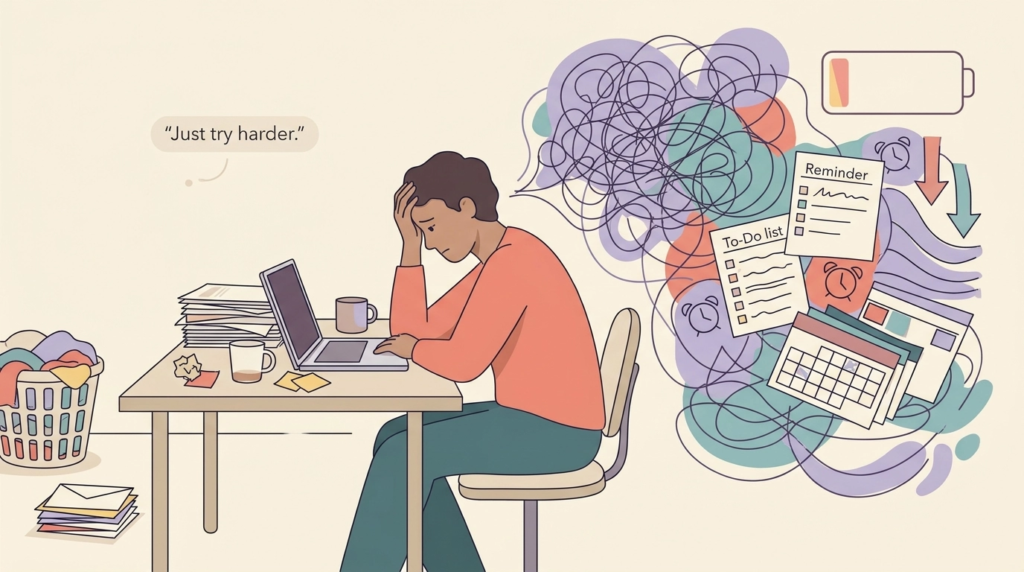
From the outside, ADHD burnout and laziness can look exactly the same. Both can involve unfinished tasks, missed deadlines, messy rooms, and staying in bed longer than planned.
The difference is what’s happening on the inside. Other people only see the result, not the effort, stress, and exhaustion behind it.
The Lazy Label Many People With ADHD Grow Up With
Many adults with ADHD were called lazy, careless, or “not trying hard enough” as children. Teachers and parents often didn’t recognize ADHD, especially in girls and in children who weren’t hyperactive.
Over time, that label can turn into a harsh inner voice. Adults may blame themselves for every missed task, even when they’re doing their best with a brain that works differently.
Why Does Getting the Difference Right Matter?
The wrong label leads to the wrong solution. If you believe you’re lazy, you may push yourself even harder, which makes burnout worse.
If you recognize ADHD burnout, the answer changes. Instead of more pressure, you need rest, support, and systems that make daily life easier.
What Are the 5 Key Differences Between ADHD Burnout and Laziness?
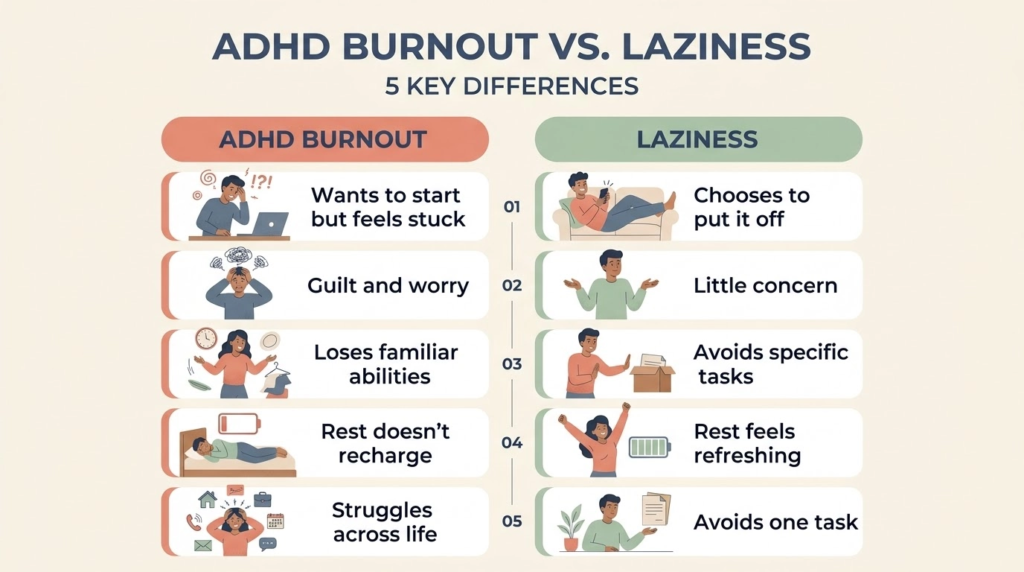
These five differences can help you understand what’s really going on. Read each one and ask yourself honestly whether it fits your experience.
1. Wanting to Do the Task but Not Being Able to Start
Laziness means not wanting to do something. ADHD burnout means wanting to do it but feeling stuck, as if your brain won’t switch on.
You may sit in front of a task for an hour, knowing exactly what to do, and still be unable to begin. That gap between wanting and doing is a strong sign of burnout.
Self-check: Do you care about getting this done, even though you can’t start?
2. Feeling Guilty or Stressed About What’s Left Undone
When someone is simply being lazy, they usually feel relaxed about skipping a task. With ADHD burnout, unfinished work often brings guilt, worry, and frustration.
You might lie awake thinking about everything you didn’t do. That stress shows you still care, which is the opposite of laziness.
Self-check: Do unfinished tasks make you feel anxious or ashamed?
3. Losing Abilities You Used to Have
Burnout often means losing skills you once managed easily. Routines fall apart, focus slips, and chores you used to handle start piling up.
Laziness doesn’t usually involve this kind of change. If you were coping well a few months ago and now struggle with basic tasks, burnout is the more likely cause.
Self-check: Are you struggling with things you used to do without much trouble?
4. Rest Doesn’t Restore Your Energy
After a lazy day, most people feel refreshed and ready to get back to work. ADHD burnout doesn’t work that way.
You can rest all weekend and still feel mentally drained on Monday. This kind of emotional fatigue sticks around because your brain needs deeper recovery, not just a short break.
Self-check: Do you still feel exhausted after resting?
5. Struggling in Many Parts of Life at Once
Everyone avoids a boring task now and then. That’s normal and doesn’t mean anything is wrong.
ADHD burnout is different because it spreads across your whole life. Work, home, friendships, and self-care can all suffer at the same time.
Self-check: Is it hard to keep up in several areas of your life right now?
ADHD Burnout vs. Laziness At a Glance
Here’s a quick side-by-side look at how ADHD burnout and laziness differ.
| ADHD Burnout | Laziness | |
| Wanting to do the task | Wants to, but feels stuck | Doesn’t want to |
| Feelings about undone tasks | Guilt, stress, frustration | Relaxed or unbothered |
| Past ability | Used to manage, now struggling | No real change |
| Effect of rest | Rest doesn’t restore energy | Rest helps quickly |
| Areas affected | Many parts of life at once | Usually one task or area |
What Are the Most Common ADHD Burnout Symptoms?
ADHD burnout symptoms go beyond the five differences above. Knowing them can help you spot burnout earlier.
Mental and Emotional Signs
ADHD burnout often starts on the inside, long before anyone else notices. You might feel it first in your mood, your patience, and how much you can handle in a day.
- Emotional fatigue that makes everyday feelings harder to handle
- Irritability or a short temper over small things
- Feeling overwhelmed by simple requests or noise
- More forgetfulness than usual, such as missing messages or losing items
Behavioral Signs
Over time, what you feel on the inside starts to show up in what you do. These changes can be easy to mistake for laziness, but they’re often signs your brain is running on empty.
- Shutdowns, where even simple tasks feel impossible
- Losing routines and systems that used to keep life on track
- Pulling away from people, canceling plans, or avoiding conversations
ADHD burnout doesn’t show up the same way for everyone, but most signs fall into two main groups. Use this quick summary to spot which ones feel familiar to you.
| Type | Symptoms |
| Mental and emotional | Emotional fatigue, irritability, overwhelm, forgetfulness |
| Behavioral | Shutdowns, lost routines, social withdrawal |
Many ADHD burnout symptoms overlap with general burnout. For the full list, read our guide to the 12 symptoms of burnout.
What Helps You Recover From ADHD Burnout?
Recovery is possible, and it usually starts with doing less, not more. The goal is to lower the load on your brain so it has room to recover.
Small Steps to Take Right Now
When you’re in ADHD burnout, the goal isn’t to fix everything at once. It’s to take a little weight off today, so your brain has room to breathe.
- Drop one task. Choose something that can wait and let it go for now.
- Lower your expectations for a few days. “Good enough” is enough.
- Rest without guilt. Rest is part of recovery, not a reward you have to earn.
- Ask for help with one thing, such as a meal, a school run, or an email.
Changes That Help Over the Next Few Weeks
Once you’ve caught your breath, small changes to your daily life can help stop burnout from coming back. Pick one or two to start with, not all four at once.
- Simplify your routines. Keep only the habits that truly matter.
- Break tasks into tiny steps. “Open the laptop” is a real first step.
- Use tools so your brain does less, such as alarms, reminders, and checklists.
- Say no more often. Fewer commitments mean less pressure and fewer crashes.
Signs It’s Time to Talk to a Professional
Speak to a doctor or therapist if:
- Your exhaustion lasts more than a few weeks
- You feel hopeless, low, or numb most of the time
- You can no longer manage work, school, or daily tasks
- You think you might have undiagnosed ADHD
A professional can also help tell burnout apart from depression. If you take ADHD medication, a doctor may review your treatment as part of recovery. Never change your medication without medical advice.
If you are in danger or thinking about harming yourself, call your local emergency number or a crisis helpline right away. In the US, you can call or text 988.
How Can You Stop ADHD Burnout From Happening Again?
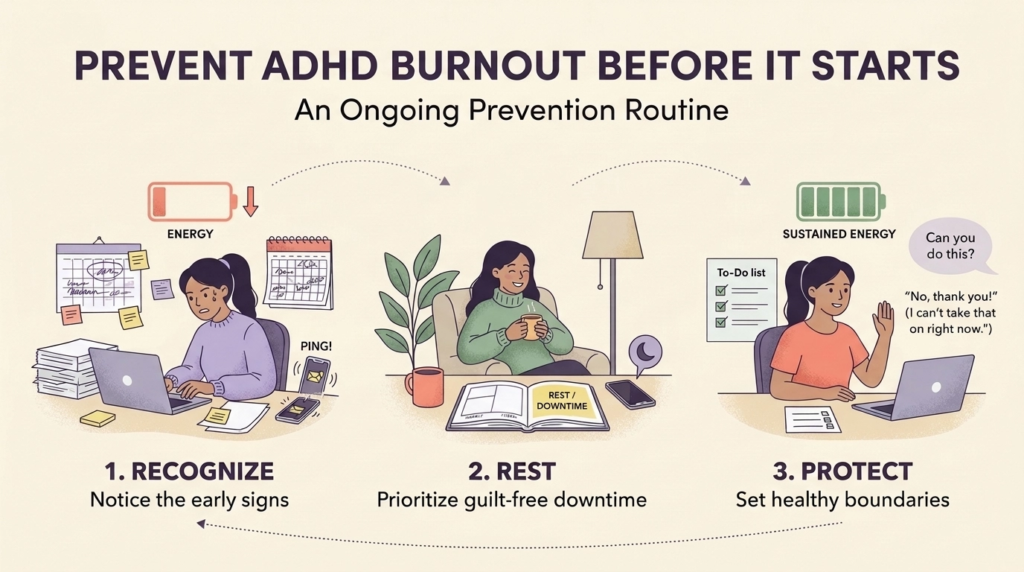
Preventing another ADHD burnout is about catching the cycle early and protecting your energy before it runs out.
Spotting the Early Warning Stage
The first stage of the burnout cycle often feels good. You’re motivated, busy, and saying yes to everything.
Learn to treat that burst of energy as a signal to slow down, not speed up. Before you take on something new, ask yourself what you’ll drop to make room for it.
Building Rest Into Your Week
Plan downtime before you need it, the same way you’d plan a meeting or appointment. Even one short, protected break each day helps.
It also helps to stop measuring yourself against people without ADHD. Working with your brain, rather than against it, is one of the most effective ways to avoid another ADHD burnout.
What Do Experts Say About ADHD and Burnout?
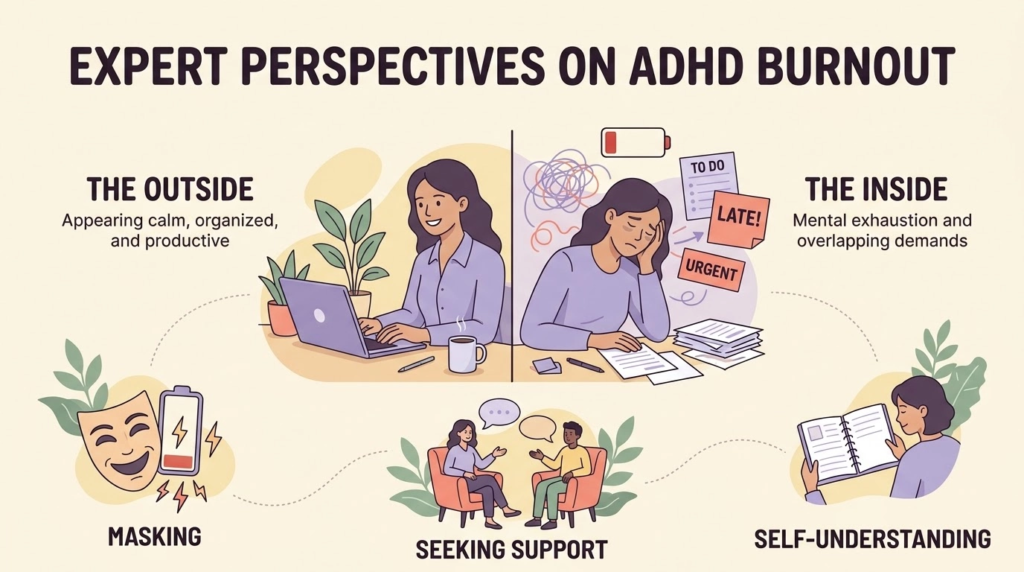
ADHD burnout is not an official medical diagnosis. However, clinicians widely recognize it as a real and common experience for people with ADHD.
Experts point to masking as a major cause. Simply Psychology’s guide to ADHD burnout explains that hiding ADHD traits takes a great deal of energy, and that many people with ADHD learn to mask early in life. This is especially true for women, who are far more likely to go undiagnosed.
Recovery advice from psychologists focuses on understanding your own needs. Clinical psychologist Dr Lauren Breese advises taking time to understand how ADHD affects you, and says part of this process is learning to ask for help and to say no when you need to.
Research also shows a clear link between ADHD and burnout. A 2024 study of 171 employees published in AIMS Public Health found that workers with ADHD reported higher levels of job burnout than those without ADHD. Difficulties with time management and with organization and problem-solving helped explain why.
What Else Do People Ask About ADHD Burnout?
ADHD burnout raises many questions, especially for people who have spent years thinking they were simply lazy. Below are short, clear answers to the questions people ask most often.
Is ADHD Burnout Real?
Yes, ADHD burnout is real. It is not a formal medical diagnosis, but doctors and therapists widely recognize it as a pattern of deep exhaustion that happens when people with ADHD push themselves too hard for too long.
How Long Does ADHD Burnout Last?
ADHD burnout can last from a few days to several weeks or months. How long it lasts depends on your stress levels, your support, whether your ADHD is treated, and how quickly you reduce the demands on you.
How Is ADHD Burnout Different From Autistic Burnout?
ADHD burnout and autistic burnout share features such as exhaustion, shutdowns, and losing skills. However, they are not the same. Many people are both autistic and ADHD, and they may experience both types.
What is the Link Between ADHD Burnout and Depression?
ADHD burnout can lead to depression if it is ignored for a long time. The two can look similar, so a doctor or therapist can help you understand which one you’re experiencing and what treatment fits.
Does ADHD Medication Help With Burnout?
ADHD medication can ease the daily load on the brain, which may lower burnout risk. However, it doesn’t remove stress or masking, so people who take medication can still burnout. Always talk to your doctor first.
Can You Have ADHD Burnout Without a Diagnosis?
You can experience ADHD burnout without a diagnosis. In fact, undiagnosed ADHD often makes burnout more likely, because people keep pushing harder without understanding why everyday tasks feel so difficult.
Can Kids and Teens Get ADHD Burnout?
Children and teens with ADHD can burn out from school demands, homework, and trying to fit in. Signs include falling grades, frequent meltdowns, avoiding school, and losing interest in hobbies. Parents should take these signs seriously.
How Do You Explain ADHD Burnout to Family or Your Boss?
Keep it simple and specific. You might say, “My brain is overloaded right now, not unwilling.” Then ask for one or two practical changes, such as a deadline extension or help with a household task.
So, Are You Lazy or Just Running on Empty?
If you’ve read this far and recognized yourself in these differences, the answer is probably clear. ADHD burnout is not a sign that you’re lazy or weak. It is a sign that you’ve been working too hard, for too long, with a brain that needs a different kind of support.
Recovery starts with small, kind steps. Let one task go today, rest without guilt, and ask someone for help with something that feels heavy. Each step lowers the pressure and gives your brain the space it needs to recover.
If your exhaustion has lasted for weeks or is affecting your daily life, reaching out to a doctor or therapist is a strong and sensible choice. To learn more about how burnout shows up in everyday life, read our guide to the 12 symptoms of burnout you shouldn’t ignore, and explore more articles in the For You section of Healthconvos.