
The best public speaking tips for people with social anxiety are to prepare thoroughly, practice out loud, use slow breathing to calm your body, focus on your message instead of the audience, and start with small, low-pressure speaking situations. Anxiety usually eases with gradual practice, and therapy such as CBT can help if fear feels overwhelming.
Your heart races, your hands shake, and the moment you stand up, your mind goes completely blank. If that sounds familiar, you’re far from alone, and the fear is more manageable than it feels. This guide explains why social anxiety makes speaking so hard, shares 10 practical public speaking tips for before, during, and after you speak, and shows you how to keep improving with every small step.
What Is Public Speaking, and Why Does It Feel So Scary?
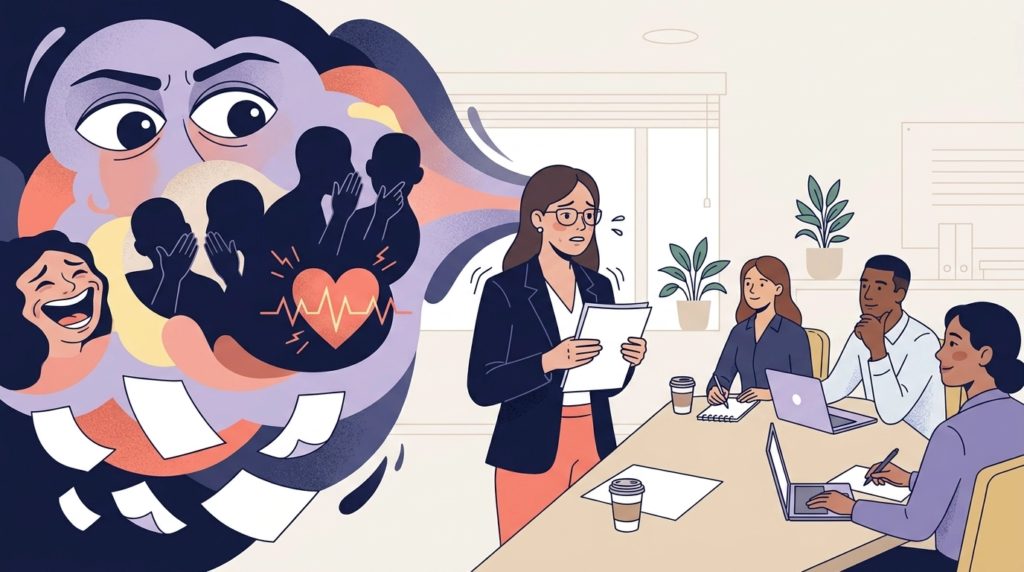
Public speaking is talking to a group of people with a clear purpose, and it feels scary because the brain treats being watched and judged as a threat. Fear of public speaking is one of the most common social fears, so feeling nervous is normal.
What Does Public Speaking Really Mean?
A simple public speaking definition is talking to a group of people to inform, explain, or persuade. That includes a class presentation, a work update, a wedding toast, or a question asked in a meeting.
If you were to define public speech in plain terms, it is any spoken message delivered to an audience rather than to one person. The public speech definition doesn’t require a stage, a microphone, or a big crowd. Most public speech happens in everyday places like classrooms, offices, and family gatherings.
Understanding this broader public speaking meaning matters for people with social anxiety. It shows that speaking skills are built in small, everyday moments, not only on big stages.
Why Is the Fear of Public Speaking So Common?
Public speaking is the most common social fear in large national surveys. In the US National Comorbidity Survey Replication, public speaking/performance was the most common social fear at 21.2%, followed by speaking up in a meeting or class at 19.5%.
More recent surveys show similar results. According to Chapman University’s Survey of American Fears, 33.7% of Americans were afraid or very afraid of public speaking in 2025.
Feeling nervous before speaking doesn’t mean something is wrong with you. It means you’re human.
How Does Social Anxiety Affect Public Speaking?
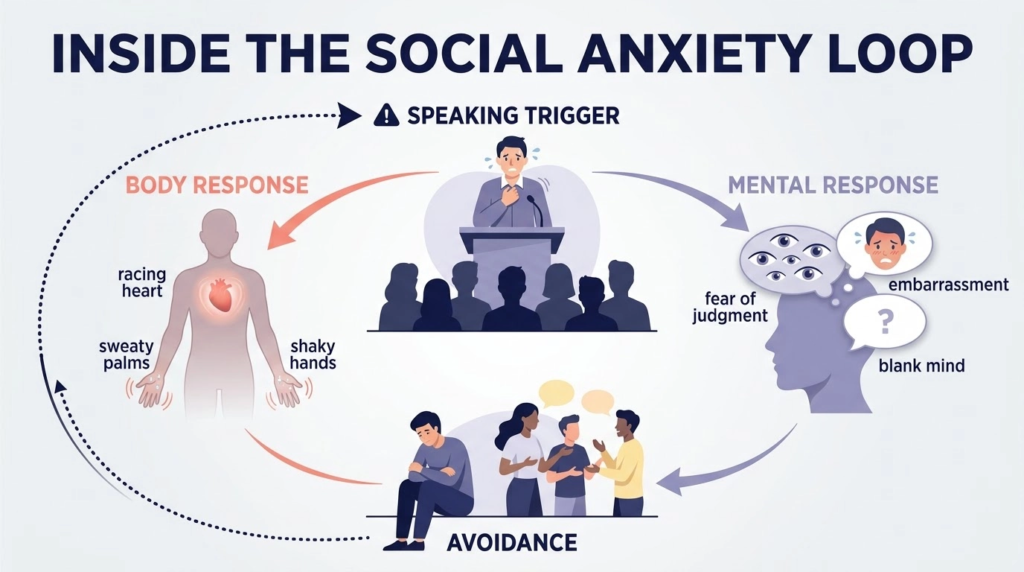
Social anxiety makes public speaking harder by triggering a strong fear of being judged, which causes physical symptoms like a racing heart and shaking, and anxious thoughts that can make your mind go blank. Unlike normal nerves, this fear is stronger, lasts longer, and can lead people to avoid speaking entirely.
Social anxiety is also common. According to the National Institute of Mental Health, an estimated 7.1% of U.S. adults had social anxiety disorder in the past year, and an estimated 12.1% of U.S. adults experience social anxiety disorder at some time in their lives.
To explain public speaking anxiety simply, it helps to look at two parts: what happens in your body and what happens in your mind.
What Happens in Your Body
Your body reacts to speaking anxiety by switching on its alarm system, the same response that helps people react to real danger.
You may notice:
- A racing or pounding heart
- Sweating or feeling hot
- Shaking hands or legs
- A dry mouth or a shaky voice
- Shallow, fast breathing
These reactions feel scary, but they are not harmful. Your body is trying to protect you from a danger that isn’t really there.
What Happens in Your Mind
Your mind reacts with worried thoughts about being judged, such as:
- “Everyone will notice I’m nervous.”
- “I’ll say something embarrassing.”
- “They’ll think I’m stupid.”
These thoughts can make your mind go blank or make you replay every small mistake afterward. Over time, avoiding speaking can make the fear grow, because you never get the chance to learn that you can cope.
What Public Speaking Tips Help Before You Speak?
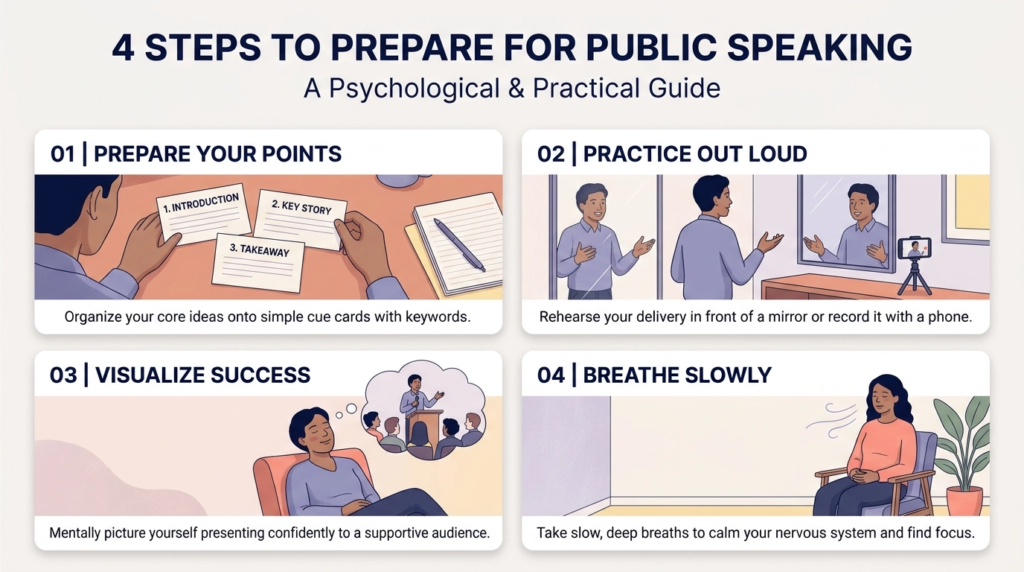
The most helpful public speaking tips before you speak are to prepare your key points instead of a script, practice out loud in small steps, picture the talk going well, and use slow breathing to calm your body. Preparation lowers anxiety because it makes the situation feel familiar.
1. Prepare Your Message, Not a Word-for-Word Script
Knowing your main points works better than memorizing every word. If you rely on a memorized script, forgetting one line can make the whole speech feel like it’s falling apart.
Instead, try this:
- Write down your three to five key ideas.
- Add one example or story for each.
- Put them on small cards or a single page as prompts.
This gives you structure without the pressure of perfect wording.
2. Practice Out Loud in Small Steps
Practicing out loud helps the real moment feel familiar, because hearing your own voice is different from reading notes silently.
Try practicing in stages:
- Speak alone in a quiet room.
- Practice in front of a mirror.
- Record yourself on your phone.
- Present to one trusted friend or family member.
Each step builds confidence for the next. These public presentation tips work for anything from a class talk to a work meeting.
3. Picture It Going Well
Picturing your talk going well helps your brain treat speaking as familiar rather than threatening. People with social anxiety often imagine everything going wrong, and mental rehearsal works the other way.
Spend a few minutes imagining yourself walking up calmly, speaking clearly, and finishing well. Picture the audience nodding or smiling.
4. Use Slow Breathing to Calm Your Body
Slow breathing is one of the quickest ways to calm your body’s alarm system, and you can do it without anyone noticing.
Try this a few minutes before you speak:
- Breathe in through your nose for four counts.
- Breathe out slowly through your mouth for six counts.
- Repeat five to ten times.
A longer out-breath signals to your body that you’re safe, which can steady your heart and your voice.
What Public Speaking Tips Help While You’re Speaking?
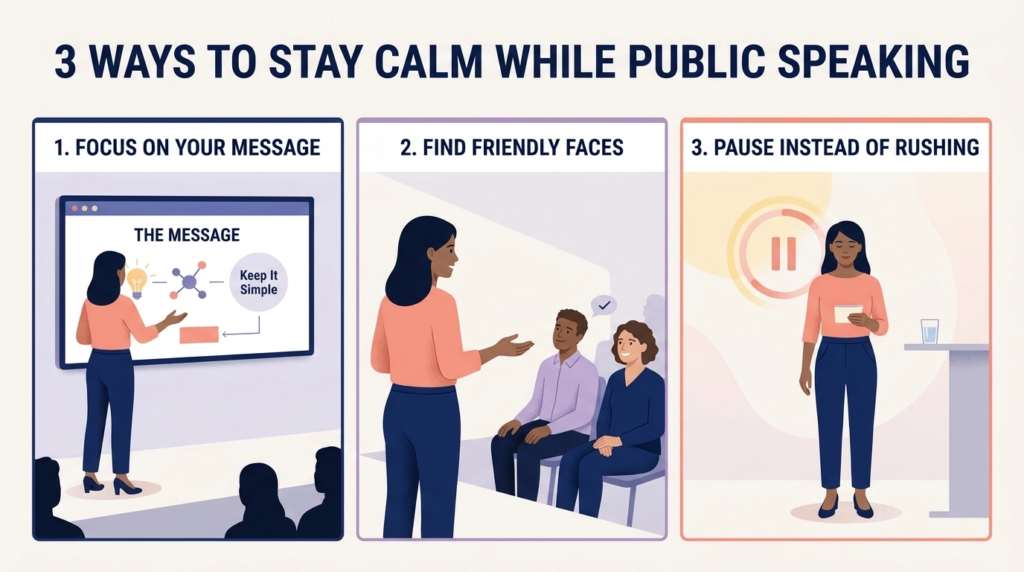
While speaking, focus on your message instead of yourself, talk to a few friendly faces, and pause instead of rushing. The goal isn’t to feel zero nerves, but to stay steady enough to share your message.
5. Focus on Your Message, Not on Yourself
Focusing on your message lowers anxiety because it leaves less room for worrying about yourself. Social anxiety pulls your attention inward with thoughts like “How do I look? Can they tell I’m nervous?”
Shift your attention outward by asking, “What do they need to hear?” Helping the audience understand something gives your mind a more useful job.
6. Find a Few Friendly Faces
Speaking to a few friendly faces makes a large group feel smaller and safer. In almost every audience, some people look interested, nod, or smile.
Start by speaking to two or three of them. As you relax, slowly widen your eye contact to include more of the room.
7. Pause Instead of Rushing
Pausing keeps you calm and in control, while rushing makes you more likely to lose your place. Anxiety often makes people talk faster to “get it over with.”
Pauses feel long to the speaker but sound natural to the audience. If you lose your place, stop, take a breath, check your notes, and continue. Most people won’t notice anything went wrong.
What Should You Do After You Speak?
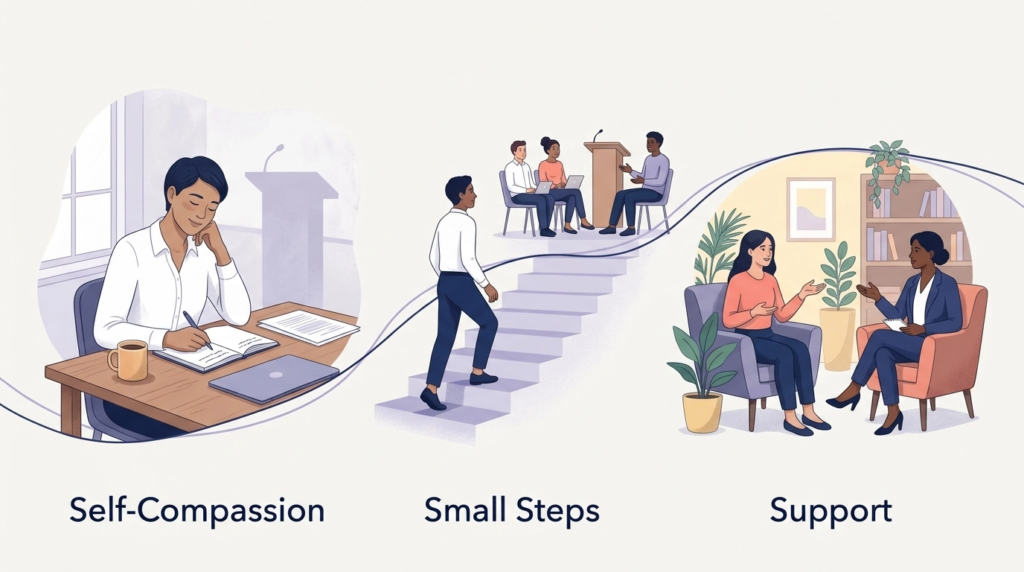
After you speak, be kind to yourself about mistakes, keep building confidence with small, low-pressure practice, and get professional support if fear feels too big. What you do afterward shapes how anxious you feel next time.
8. Be Kind to Yourself About Mistakes
Being kind to yourself after speaking stops the fear from growing. Many people with social anxiety replay every small slip for hours or even days, which keeps the anxiety alive.
Remember that audiences usually notice far less than you think. Instead of listing what went wrong, name one thing that went well. Treat yourself the way you’d treat a friend who just gave their first talk.
9. Build Confidence With Low-Pressure Practice
Confidence grows by facing small speaking situations again and again, a process psychologists call gradual exposure.
Here’s a simple ladder you can follow:
- Ask one question in a meeting or class.
- Share a short comment in a small group.
- Give a two-minute update at work or school.
- Join a supportive speaking group.
- Present to a larger audience.
Move up one step only when the current one feels manageable.
10. Get Support When Fear Feels Too Big
If anxiety stops you from speaking at work, school, or in daily life, therapy can help. According to the American Psychiatric Association, cognitive behavioral therapy (CBT) is a first-line treatment for many anxiety disorders in both children and adults.
CBT helps you notice anxious thoughts, test whether they’re true, and practice speaking in a safe, step-by-step way. Asking for help is a sign of strength, not weakness.
The table below brings all 10 public speaking tips together in one place, grouped by when to use them. Pick one action from each stage to try before your next talk, presentation, or meeting.
| Stage | Tip | One action to try |
| Before | 1. Prepare your message | Write 3–5 key points on a card |
| Before | 2. Practice out loud | Record yourself once |
| Before | 3. Picture it going well | Spend 2 minutes imagining success |
| Before | 4. Use slow breathing | Breathe in for 4, out for 6 |
| During | 5. Focus on your message | Ask, “What do they need to hear?” |
| During | 6. Find friendly faces | Start with 2–3 interested listeners |
| During | 7. Pause instead of rushing | Stop and breathe if you lose your place |
| After | 8. Be kind to yourself | Name one thing that went well |
| After | 9. Practice in small steps | Ask one question this week |
| After | 10. Get support | Talk to a therapist if fear feels too big |
What Makes a Good Public Speaker?
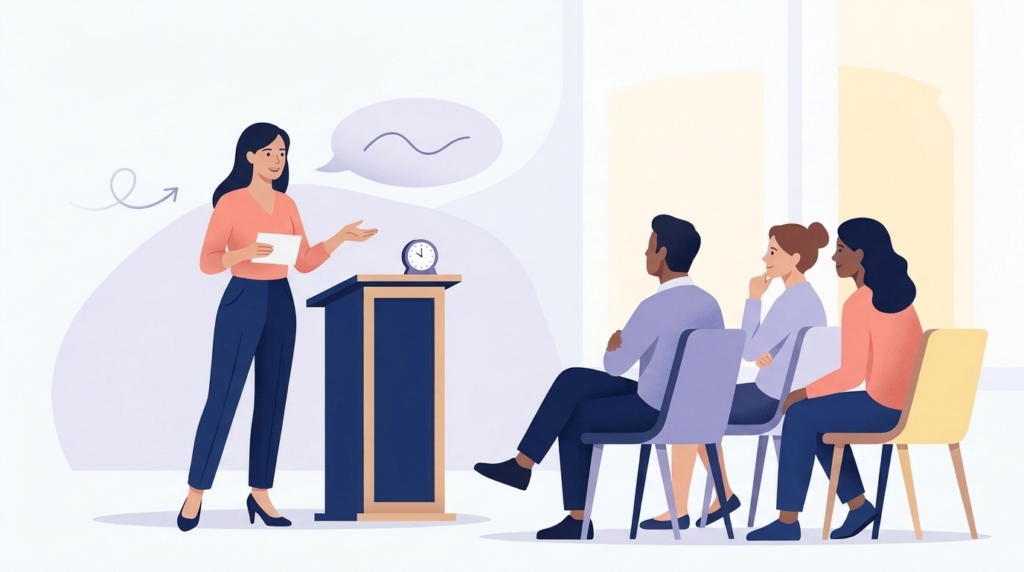
What makes a good public speaker is being clear, prepared, and focused on the audience, not being fearless. Most effective speakers still feel nervous, but they know their message, speak at a steady pace, and recover calmly from mistakes.
An effective speaker usually:
- Knows their main message clearly
- Speaks at a calm, steady pace
- Focuses on the audience’s needs
- Uses simple language and real examples
- Stays calm and moves on after mistakes
The good news is that public speaking ability is a skill, not a fixed talent. Like learning to drive or cook, it improves with practice. That’s the real answer to how to become a great speaker: steady practice, honest feedback, and patience with yourself.
Understanding this can also ease the pressure. Audiences don’t want perfection. They want someone who is clear and genuine, which an anxious speaker can absolutely offer. These skills also help in many public speaking positions and in almost any speaking field, from teaching to sales to healthcare.
How Can You Keep Improving Your Public Speaking Over Time?
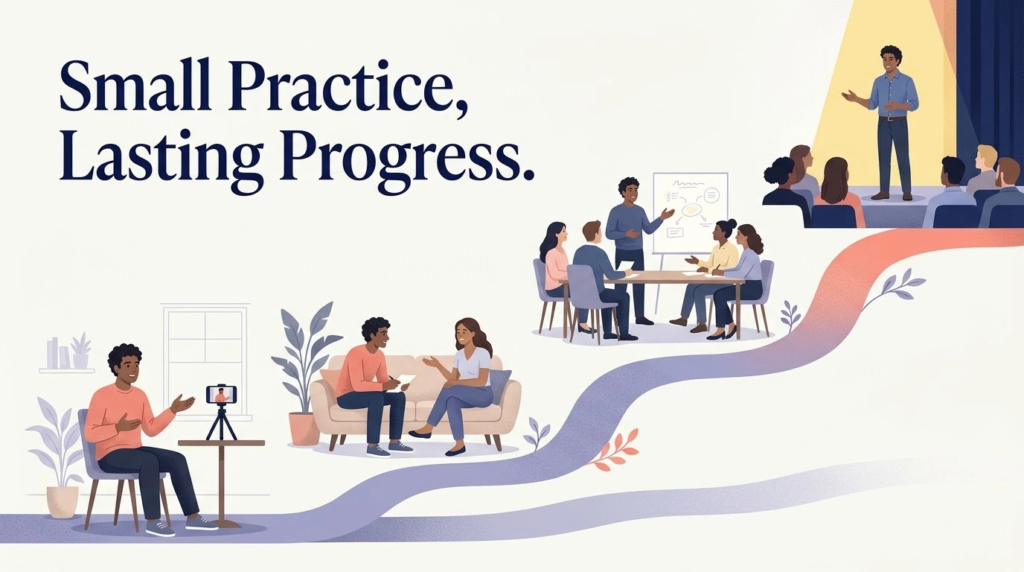
The best way to learn how to improve public speaking over time is to practice regularly, record yourself, ask for kind feedback, and gradually speak to larger groups. Steady small wins build confidence faster than waiting for one big breakthrough.
If you’ve ever asked yourself, “How can I become a better speaker?”, start with this simple monthly plan:
- Record one practice talk each week and note one thing to improve.
- Ask for kind, specific feedback from someone you trust.
- Gradually speak to larger groups as smaller ones feel easier.
- Track your progress in a notebook, including how anxious you felt before and after.
A few extra public presentation tips can also help:
- Use slides as prompts, not as a script to read word for word.
- Arrive early to get comfortable with the room or video setup.
- Keep water nearby for a dry mouth.
Learning how to become a better speaker isn’t about one big breakthrough. Each talk gives you new proof that you can cope, and that proof is what slowly shrinks the fear.
What Do Experts Say About Social Anxiety and Public Speaking?
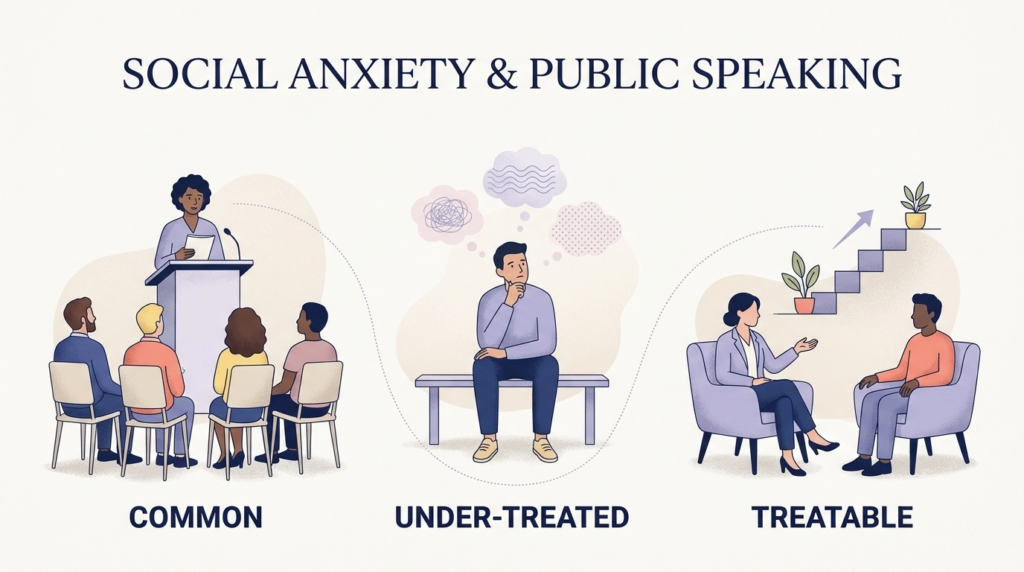
Experts agree that social anxiety is both common and treatable, and that speaking fears are the most common type. The national survey that measured Americans’ social fears concluded that social phobia is a common, under-treated disorder that leads to significant functional impairment.
In other words, many people struggle with this fear without ever getting help. That matters, because effective treatments exist.
The American Psychiatric Association lists CBT as a first-line treatment, and explains that it can help people identify and change unhelpful thought patterns. For public speaking anxiety, CBT often combines this thought work with gradual practice, much like the speaking ladder in tip 9.
Research also shows the fear is often specific. In an earlier national survey, the speaking fears were the most common of all the social fears measured. This means many people struggle mainly with speaking, which makes focused practice and support especially useful.
What Else Do People Ask About Public Speaking and Social Anxiety?
Social anxiety can make public speaking feel confusing as well as frightening. Below are short, clear answers to the questions people ask most often.
Can Social Anxiety Be Cured?
Many people with social anxiety improve a great deal with treatment and practice. Some nerves may remain, but they often become much easier to manage. CBT and gradual exposure are among the most effective approaches.
Can Medication Help With Public Speaking Anxiety?
Some people use medication prescribed by a doctor to manage performance or social anxiety. Medication isn’t right for everyone, and it works best alongside therapy and practice. Always talk to a doctor before starting any medication.
Is It Okay to Avoid Public Speaking?
Avoiding speaking can feel safer in the short term, but it often makes the fear grow over time. Taking small, manageable steps is usually better than avoiding speaking altogether.
Can People With Social Anxiety Have Public Speaking Careers?
Yes, many people with social anxiety still build successful public speaking careers or work in roles that involve presenting. Public speaking positions exist in teaching, training, and sales, and speaking skills support public speaking employment in nearly every speaking occupation and speaking field.
How Long Does It Take to Feel Comfortable Speaking?
Most people notice progress within a few weeks to a few months of regular practice. The more often you speak in low-pressure situations, the faster your confidence tends to grow.
What Should You Do If Your Mind Goes Blank?
Pause, take a slow breath, and check your notes. You can also repeat your last point or say, “Let me come back to that.” Audiences are usually patient and rarely notice.
Are Online Presentations Easier?
Online presentations can feel easier for some people because the audience feels farther away. They’re a great place to practice, though camera nerves and technical issues bring their own challenges.
How Can You Help a Child or Teen Who’s Afraid of Speaking?
Encourage gentle practice at home, praise effort rather than perfection, and avoid pushing too hard. If the fear affects school or friendships, talk to a school counselor or a child therapist.
What If Your Voice Is Worth Hearing?
Social anxiety can make you believe that staying quiet is safer. But your ideas, questions, and stories matter, and the people around you may benefit from hearing them. Confidence doesn’t come from waiting until the fear disappears. It grows each time you speak, even when your voice shakes.
You don’t have to start with a big audience. Choose one small step this week, such as asking a question in a meeting or practicing a short talk in front of a mirror. Each step teaches your brain that speaking is something you can handle.
If fear is holding you back at work, school, or in daily life, reaching out to a therapist is a strong and practical choice. To learn more about managing anxiety and stress, explore more articles in the For You section of Healthconvos, where we explain mental health topics in simple, clear language.
Great!!
Acceptance of “To err is human” automatically paves a smooth way to proceed with. One should accept the fact of being human, making mistakes, correcting mistakes and improving continuously.